
Paid Advertising5 min read
6 Checks to Run Before Your First Google Ads Campaign
Thinking of running Google Ads for the first time? Here is the pre-launch checklist we run for UK businesses, so you know what to fix before the first click costs you anything.
- Written by
- Melissa Cross
- Published
- Updated
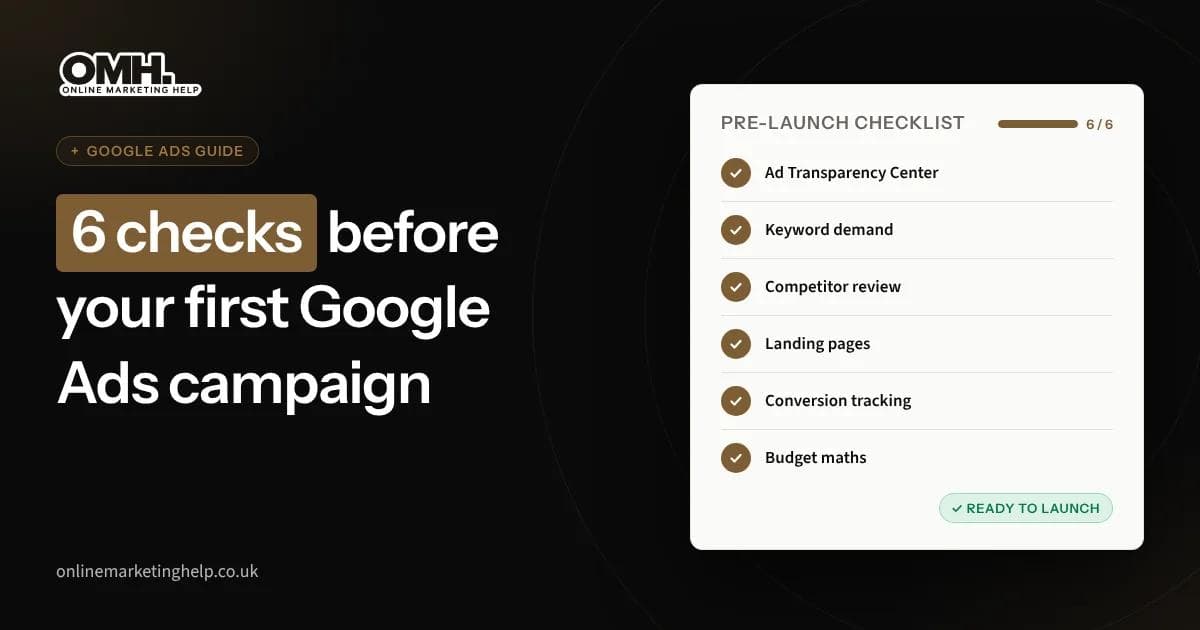
If you have never run Google Ads before, most advice online assumes you have months of account history to look at. You do not. We run this pre-launch checklist for UK businesses every week, for free, and it is the same checklist either way. Here it is, in six short checks.
1. Check the Ads Transparency Center
Open the Google Ads Transparency Center and search your business name and domain. The tool shows every ad currently running from any verified advertiser.
If you see ads under your own domain, somebody is already advertising there and the plan changes. If you see nothing, you have a clean slate.
2. Validate the demand with Keyword Planner
Google's Keyword Planner is free. Set the location to United Kingdom and type three or four phrases a customer would use. Look at monthly search volume and the suggested bid.
If demand is only 10 to 100 searches a month, Google Ads will struggle to scale. If the suggested bid is £8 on a £40 average order, the maths does not work. Niche B2B searches live in longer phrases, which convert better. Our Google Ads management is built around that shape of account.
3. Study who is already advertising
Back in the Transparency Center, search two or three competitors. Note three things from each: the offer, the landing page, and the search terms their ads appear against. Half an hour of this beats any paid competitor tool, and tells you one angle nobody else is using.
4. Check whether your landing pages are ready
Google will take your money whether or not your website converts. Open the page your Google Ads click will land on and ask:
- Does it load in under three seconds on mobile? Check with Google PageSpeed Insights.
- Is the headline about what the ad promised, not about your company?
- Can a visitor book, buy or enquire without scrolling past three screens?
- Is your phone number visible above the fold on mobile?
If any of these fail, the fix is a dedicated landing page, not more ad spend. Our website conversion solution is where most new Google Ads clients start.
5. Set up conversion tracking before launch
Smart Bidding is useless without conversions to learn from. Before launch you need: GA4 installed and linked to Google Ads, at least one conversion event defined (form, call, booking), and phone call tracking if calls are how customers reach you.
A missed call still counts as a lost lead. Our AI voice agents sit alongside this for businesses that cannot answer every call themselves.
6. Work out the real monthly budget
A worked example. A UK B2B service, average deal £3,000. Target: 10 enquiries a month. Suggested bid £3.50. Expected click to enquiry rate on a decent landing page: 5%. Maths: 10 enquiries needs 200 clicks, at £3.50 that is £700, plus 20% for auction variance, so plan £850 to £900 a month.

Below £500 a month Google Ads will struggle. Above £5,000, consider whether paid search alone is the right first channel, or whether you need qualified leads from more than one place.
What each check actually catches
| Check | What it catches | Fix if it fails |
|---|---|---|
| Transparency Center | Orphan ad accounts, or a competitor bidding on your brand | Close the orphan account, plan a brand defence campaign |
| Keyword Planner demand | Not enough UK demand to spend a credible budget | Reframe around long tail terms, or try another channel |
| Competitor review | Everyone is leading with the same promise | Different angle in the ad copy and landing page |
| Landing page readiness | Clicks will land on a page that cannot convert them | Build a dedicated landing page before launch |
| Conversion tracking | Smart Bidding has nothing to learn from, phone calls invisible | GA4, Tag Manager and call tracking in place first |
| Budget maths | Monthly spend too thin for the category's CPC | Larger budget, narrower niche, or a different first channel |
UK rules worth knowing
- Regulated sectors need Google certification. Financial services, healthcare, pharma and gambling all need verifying before ads run (Search Engine Land overview). Start it early.
- Tracking falls under UK GDPR and PECR. Cookie-based conversion tracking needs a compliant consent banner (ICO guidance).
- The CAP Code applies to ad copy. Every claim ("fastest", "guaranteed") must be substantiable (ASA rulings). General guidance, not legal advice.
When to stop doing it yourself
If a check turned up something you cannot fix in a week, that is when a conversation helps. We run this audit for free, get in touch or see what paid management looks like after launch.
Frequently asked questions
Do I need a checklist before my first Google Ads campaign?
Yes. In fact a pre-launch checklist matters more than an existing account audit. The pre-launch checklist tells you whether Google Ads is the right channel for you at all. A badly chosen channel just drains budget until you stop.
How long does this pre-launch checklist take?
An hour of your own time, plus whatever landing page or tracking work falls out. If we run it, two working days.
What is the Google Ads Transparency Center?
Google's free public register of every verified advertiser's current ads, searchable by name or domain. No login, no cost.
How much budget do I need to launch Google Ads in the UK?
It depends on your category's CPC, which is why step 6 of the audit exists. As a floor, below £500 a month in a competitive UK category you will not have enough clicks to learn anything useful.
In short
These six checks are the cheapest thing you will do in your first year of advertising. If you want help, book a free consultation and we will walk you through all six checks on your own account.
Keep reading
Related insights
Paid Advertising
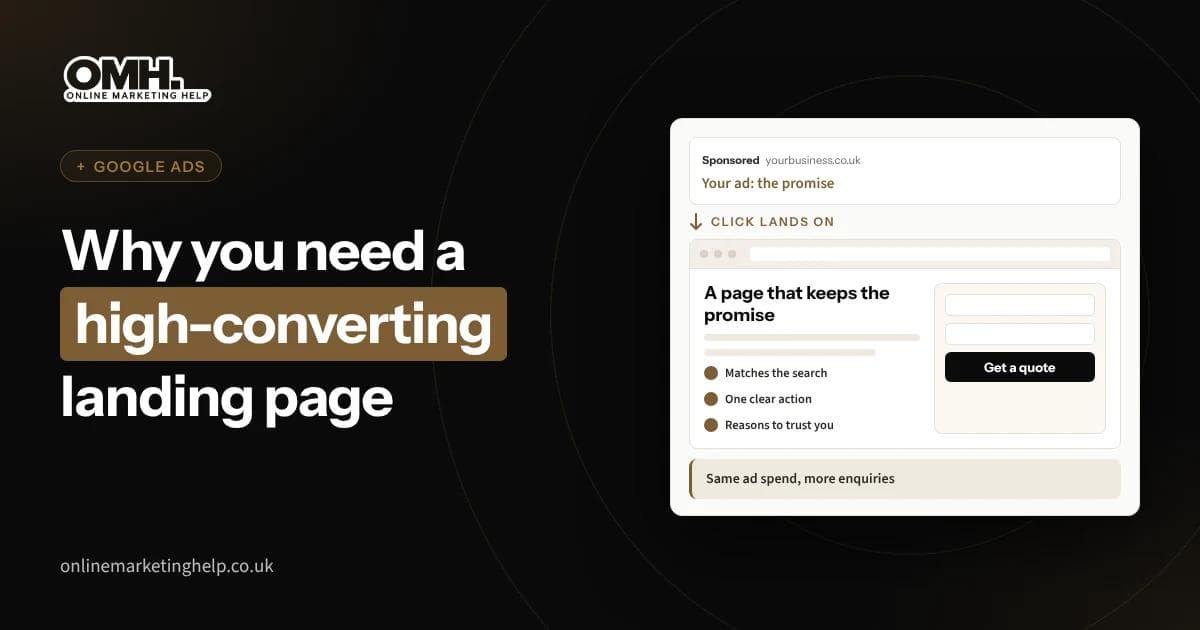
Why You Need a High-Converting Landing Page for Google Ads
Running Google Ads without a page built for that traffic is one of the most common ways UK businesses waste spend. Here is why it matters, what a weak page costs you, and what to check first.
Read article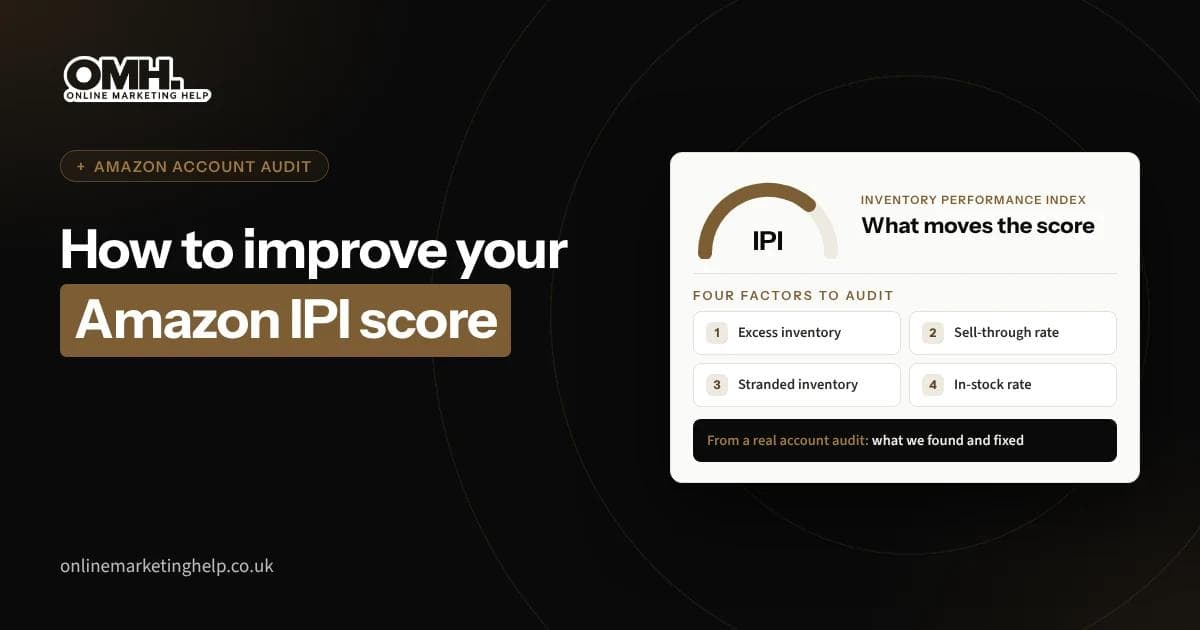
Paid Advertising
How to Improve Your Amazon IPI Score (From a Real Account Audit)
A real UK seller account scored 669 on Amazon’s Inventory Performance Index, yet three of its four factors carried warnings. Here is what the score measures, what it misses, and the five steps we use to fix it.
Read article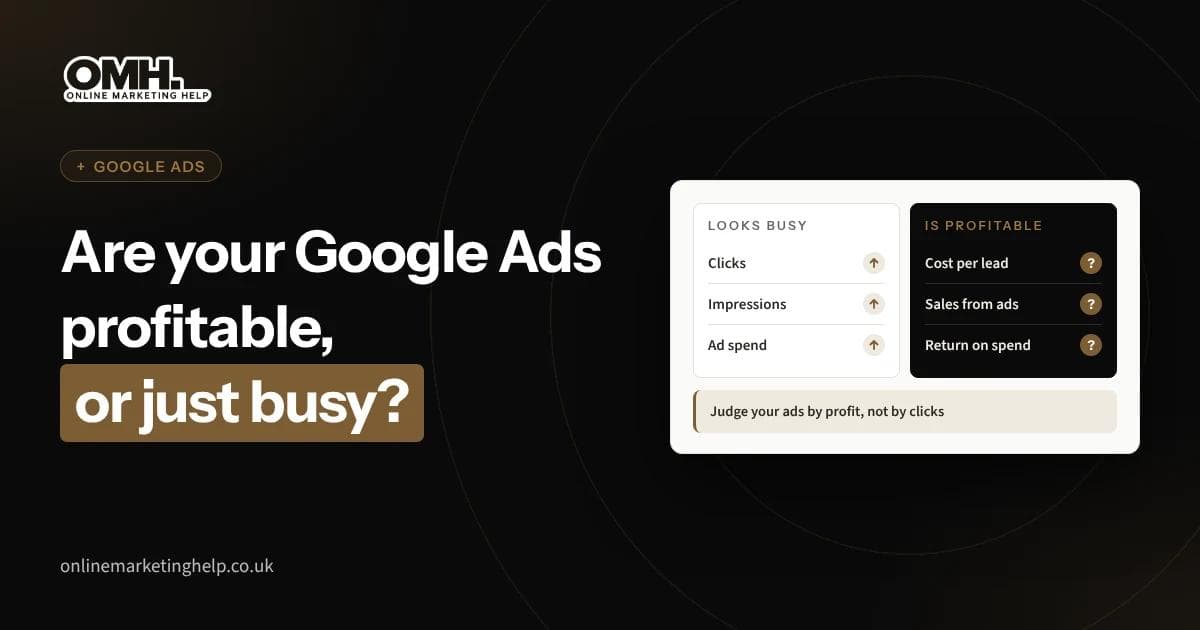
Paid Advertising
Your Agency Says Your Google Ads Are Performing. But Are They Actually Making You Money?
Plenty of Google Ads enquiries but no rise in sales? Behind the Brief Edition 002 shows how to check cost per lead, customer acquisition cost, ROI and ROAS, so you know whether your ads are making you money.
Read articleTurn useful ideas into a practical growth plan.
Tell us what you want to improve and what you have tried so far. We will help you identify the clearest next step.
What happens next
- Review the current position
- Define the commercial objective
- Agree the work and measurement
Ring it from any phone
It's set up as a fictional heating company in Leeds and answers day and night. Standard call rates apply.
The demo line is being set up. Book a demo and we'll play you one on the call.
Three things to try
- 1Book a boiler service for next week.
- 2Ask to speak to a person.
- 3Ask something it can't know, and hear how it handles it.